






.jpg "CHIH AN LIN, MD, Colorectal Surgeon photo")
CHIH AN LIN, MD, Colorectal Surgeon
Attending physician
Taichung Veterans General Hospital, Department of Colorectal Surgery
TAICHUNG, Taichung, Taiwan (Republic of China)
All of the relevant financial relationships listed below have been mitigated.
This individual has no financial relationships with ineligible companies.
.jpg "Chang Lin Lin photo")
Chang Lin Lin
Attending physician
colorectal surgery
Taichung, Taichung, Taiwan (Republic of China)
All of the relevant financial relationships listed below have been mitigated.
This individual has no financial relationships with ineligible companies.
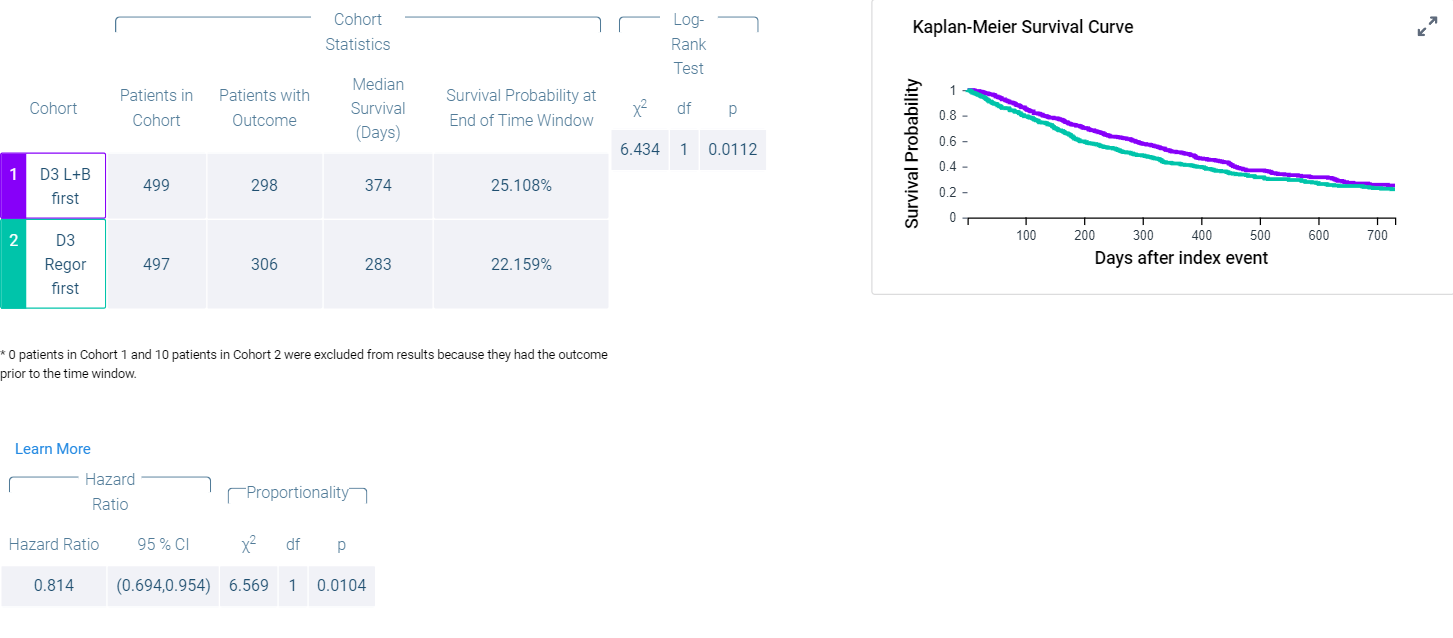 Kaplan-Meier survival curves and cohort statistics for patients receiving FTD/TPI + bevacizumab (Cohort 1) versus regorafenib (Cohort 2) as third-line treatments for chemotherapy-refractory metastatic colorectal cancer (mCRC). The median overall survival (OS) was 374 days (12.5 months) for the FTD/TPI + bevacizumab group and 283 days (9.4 months) for the regorafenib group. The hazard ratio (HR) was 0.814 (95% CI: 0.694–0.954, p = 0.0112), indicating a significant survival benefit for the FTD/TPI + bevacizumab group. Log-rank test results further confirmed the statistical significance of the survival difference (χ² = 6.434, p = 0.0112).
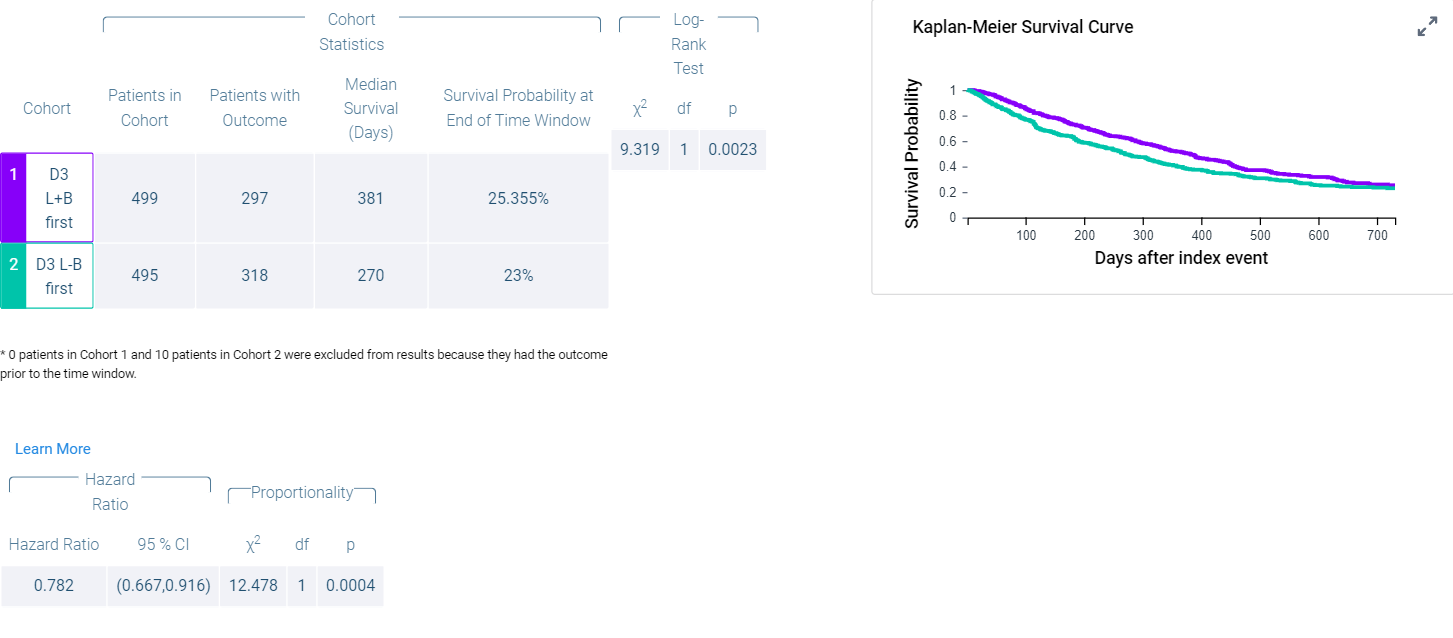 aplan-Meier survival curves and cohort statistics comparing overall survival (OS) of metastatic colorectal cancer (mCRC) patients receiving FTD/TPI + bevacizumab (Cohort 1, purple line) versus FTD/TPI monotherapy (Cohort 2, blue line) as third-line treatments. Cohort 1 had a median OS of 381 days (12.7 months), while Cohort 2 had a median OS of 270 days (9.0 months). The hazard ratio (HR) was 0.782 (95% CI: 0.667–0.916, p = 0.0004), indicating a significant survival advantage for the FTD/TPI + bevacizumab group. The log-rank test results confirmed a significant difference in survival between the two groups (χ² = 12.478, p = 0.0004).