






Donghyoun Lee, 16 (he/him/his)
Associate Professor
Department of Surgery, Jeju National University Hostpital, Jeju National University College of Medicine
jeju, Cheju-do, Republic of Korea
All of the relevant financial relationships listed below have been mitigated.
This individual has no financial relationships with ineligible companies.
Gi Won Ha, 18
professor
Chonbuk National University Hospital
Jeon Ju, Cholla-bukto, Republic of Korea
Disclosure information not submitted.

Gyung Mo Son, PhD
professor
Pusan National Universtiy Hospital
Busan, Pusan-jikhalsi, Republic of Korea
All of the relevant financial relationships listed below have been mitigated.
This individual has no financial relationships with ineligible companies.
Donghyoun Lee, 16 (he/him/his)
Associate Professor
Department of Surgery, Jeju National University Hostpital, Jeju National University College of Medicine
jeju, Cheju-do, Republic of Korea
All of the relevant financial relationships listed below have been mitigated.
This individual has no financial relationships with ineligible companies.
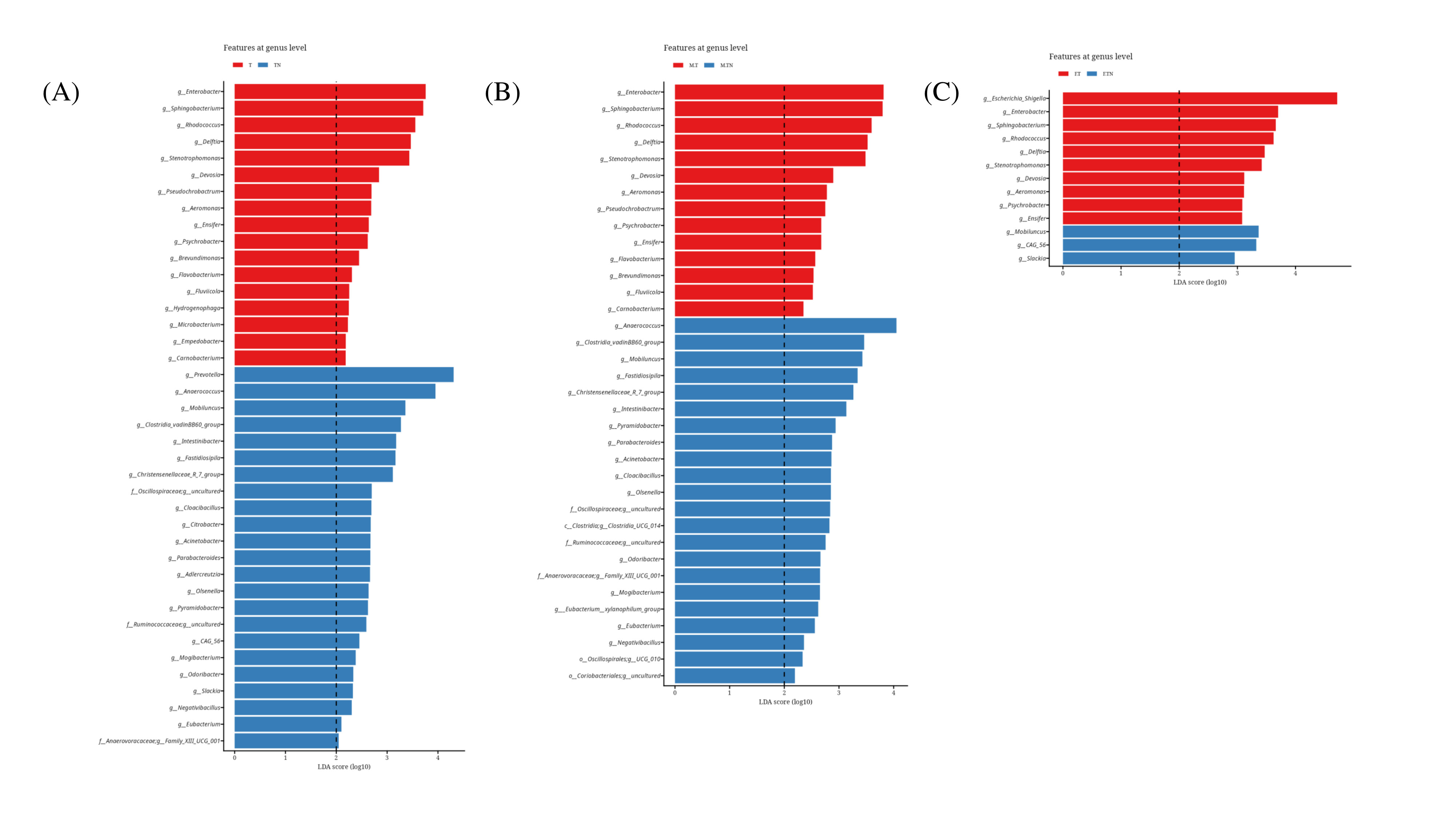 This figure shows a comparison of the overall and gender-specific microbiota analysis between the T (non-lymph node metastasis) and TN (lymph node metastasis) groups within different cancer stages. It includes linear discriminant analysis (LDA) results highlighting key bacterial genera that differ between these groups, which is crucial to understanding the study’s discovery of early-stage biomarkers for colorectal cancer without lymph node metastasis. It demonstrates how specific aerobic bacteria, which are potential markers, are present in the T group but absent in the TN group, divided by gender.
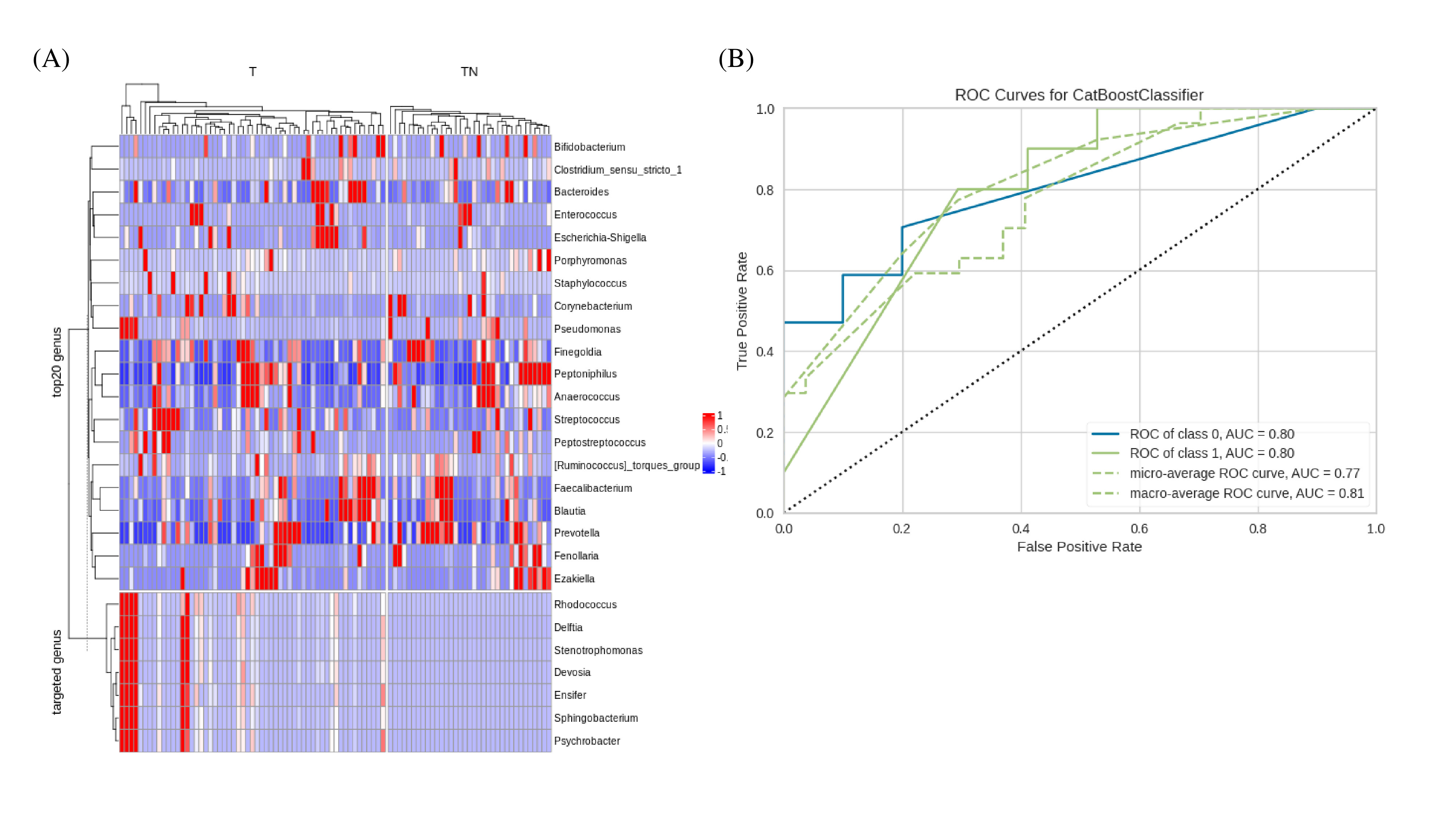 This figure focuses on the prediction of early colorectal cancer-specific fecal microbiome markers using the CatBoost algorithm. It includes results showing the relative abundance of the top 20 and seven targeted bacterial genera in 92 CRC samples. The ROC curve and AUC value demonstrate the high accuracy of the model in distinguishing between T and TN groups, making it a key figure supporting the study's conclusions about the diagnostic potential of specific microbiota.